.grsec patch size_overflow
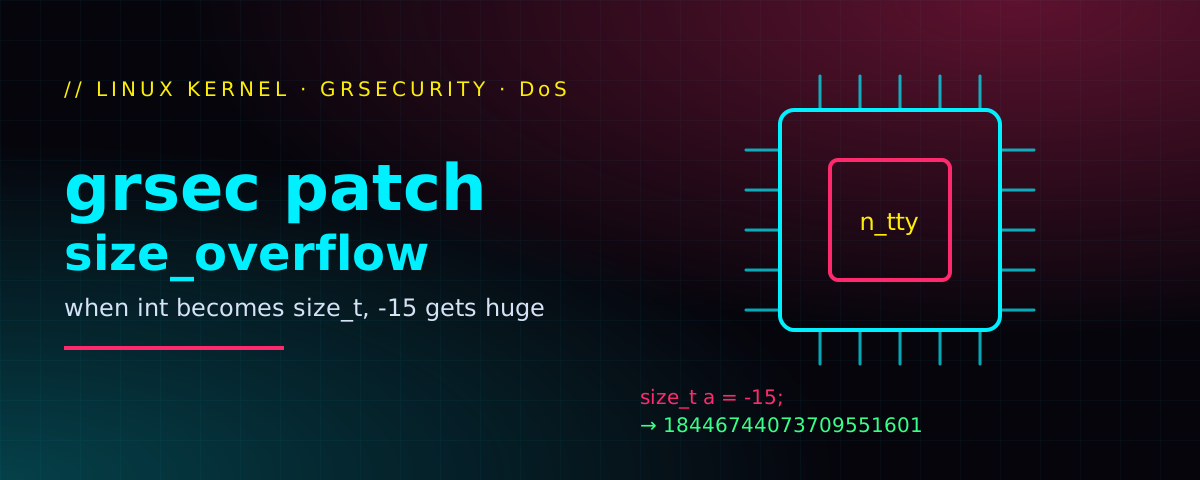
You probably know the Linux kernel hardening patches from grsecurity. Even hardening patches can introduce bugs, and this one is a classic: a signed value quietly turning into an unsigned one.
int to size_t in the n_tty code. If the computed buffer room goes negative, it wraps to an enormous unsigned number, which can lead to a local DoS via 100% CPU usage.The bug
I originally found this through a tweet about the size overflow in the grsec patch. That tweet has since been deleted.
The problem line is this one:
room = N_TTY_BUF_SIZE - (ldata->read_head - tail);When you change a variable from int (signed) to size_t (unsigned), you have to be sure you only ever store non-negative values in it. So what happens if the right-hand side goes negative?
A tiny demo
Here’s the simplest possible example:
$ cat test.c#include <stdio.h>
int main(void) {
size_t a = -15;
printf("%lu\n", a);
return 0;
}$ gcc -Wall test.c -o test
$ ./test
18446744073709551601A small negative value like -15 becomes a gigantic unsigned one. The bits don’t change, only how they are read:
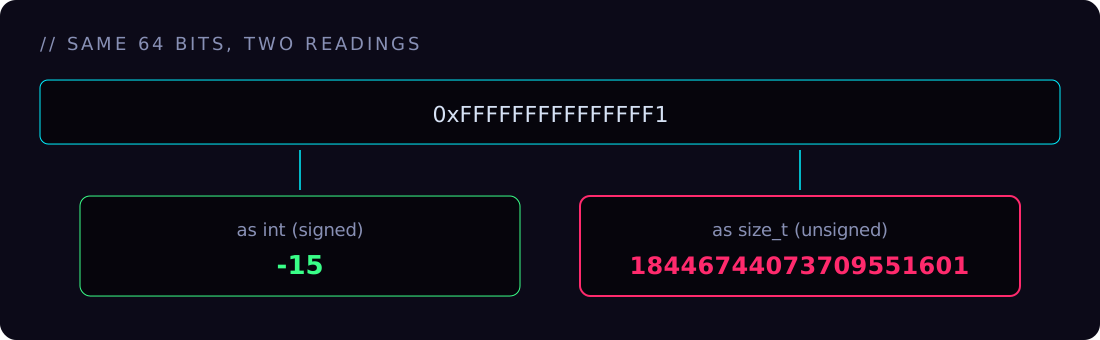
room tells the kernel how much space is left in the buffer. A wrapped value means “almost infinite room”, and that can be abused for a local DoS that pins the CPU at 100%.The fix
Check that the value isn’t negative before using it. A ternary operator does the job as a quick fix:
room = ((N_TTY_BUF_SIZE - (ldata->read_head - tail)) > 0) ? N_TTY_BUF_SIZE - (ldata->read_head - tail) : 0;> 0 test is always true for any non-zero result. Watch your types.Lessons learned
- Changing
inttosize_tis not a cosmetic change. Every place that can produce a negative value becomes a potential overflow. size_t a = -15;compiles fine, even with-Wall. The compiler won’t save you here.- Validate the sign before the assignment, not after it.